When your furnace stops heating, you need to get your home warm again—and decide how much money to put into the equipment you already own. An affordable repair may be enough. But if the furnace has become unreliable or needs extensive work, replacement may be a better use of your budget.
The challenge is knowing which situation you’re facing. Age and repair cost offer part of the answer, but the condition of the furnace and how well it meets your home’s heating needs matter, too. An inspection helps establish whether fixing the immediate problem will leave you with a system worth keeping.
This guide helps Wheat Ridge homeowners compare repair and replacement with a clear understanding of what each option would accomplish. You’ll learn which findings favor repair, when new equipment deserves consideration, and what costs to include before making the decision.
Start With an Inspection of the Furnace
Before comparing repair and replacement, a technician needs to determine why the furnace is not heating properly. The same symptom can have different causes: a furnace that shuts off repeatedly might have restricted airflow, a control problem, or another fault requiring investigation.
The inspection should establish:
- What failed and why. Replacing a damaged part may not solve the problem if the condition that caused its failure remains.
- Whether the furnace can operate safely after repair. Problems involving combustion, venting, or the heat exchanger require particular attention.
- The condition of the remaining equipment. One failed component in a sound furnace is a different investment from a repair that leaves several other problems unresolved.
- Whether the heating problem extends beyond the furnace. Poor airflow or damaged ducts may contribute to cold rooms even when the furnace produces heat.
Coffman & Company provides furnace repair for Wheat Ridge and the surrounding Denver area, including equipment troubleshooting and airflow checks. The findings establish what repair would restore, what it would cost, and whether additional work is needed.
If the technician identifies an unsafe condition and shuts the furnace down, leave it off until a qualified professional confirms it is safe to operate. Restoring heat safely comes before deciding which option costs less.
When Repairing the Furnace Makes Sense
Repair is often worthwhile when the furnace heated your home satisfactorily before the breakdown and the problem can be corrected without extensive work.
An ignition fault or failed control does not necessarily mean the rest of the furnace is worn out. Replacing a blower motor may also be reasonable when the furnace is otherwise in good condition. The component's price matters, but so does the equipment you would be keeping.
A repair is more reassuring when:
- The furnace has been dependable.
- The inspection finds no other significant defects.
- The repair addresses the cause of the breakdown.
- The repair costs substantially less than replacement, with no other major repairs identified during the inspection.
An active warranty can make repair more affordable by covering an eligible replacement part. Diagnosis, installation labor, and other expenses may still apply. Coffman can help determine which coverage applies and explain the remaining charges, giving you a repair total to compare with the cost of new equipment.
An Older Furnace Does Not Automatically Need Replacement
Age is a reason to look more closely at condition and repair history. It cannot establish whether a particular furnace has another dependable winter ahead.
An affordable repair can give you time to plan a future installation. That may be useful if the furnace has otherwise been reliable and the inspection reveals no major concerns.
Ask which additional problems were found rather than assuming either that the furnace will fail again soon or that the repair guarantees years of trouble-free heating.
When Replacement Deserves a Closer Comparison
Replacement is worth pricing when fixing the immediate breakdown would require substantial spending on equipment with other significant weaknesses.
A damaged heat exchanger, for example, can create a larger decision than a minor ignition repair. The heat exchanger transfers heat from combustion to the household air while keeping the exhaust gases separate. The work involved, warranty coverage, and condition of the surrounding furnace all affect whether replacing that component makes financial sense.
Repeated breakdowns matter, too. A furnace that has needed several unrelated repairs presents a different risk from one that has worked reliably until its first failure.
Replacement may also offer an opportunity to correct an equipment-sizing problem. However, the proposal needs to explain how the new furnace's capacity was selected. Buying a larger unit does not automatically produce more comfortable rooms; oversized equipment can cycle too frequently.
Coffman's furnace installation process includes evaluating the home's heating needs and existing ducts before selecting equipment. That helps connect the replacement recommendation to the conditions in your home.
Facing a major furnace repair? Schedule with Coffman & Company to understand what failed, what repair would accomplish, and whether replacement is worth the additional cost.
Does Replacing the Furnace Mean Replacing the AC?
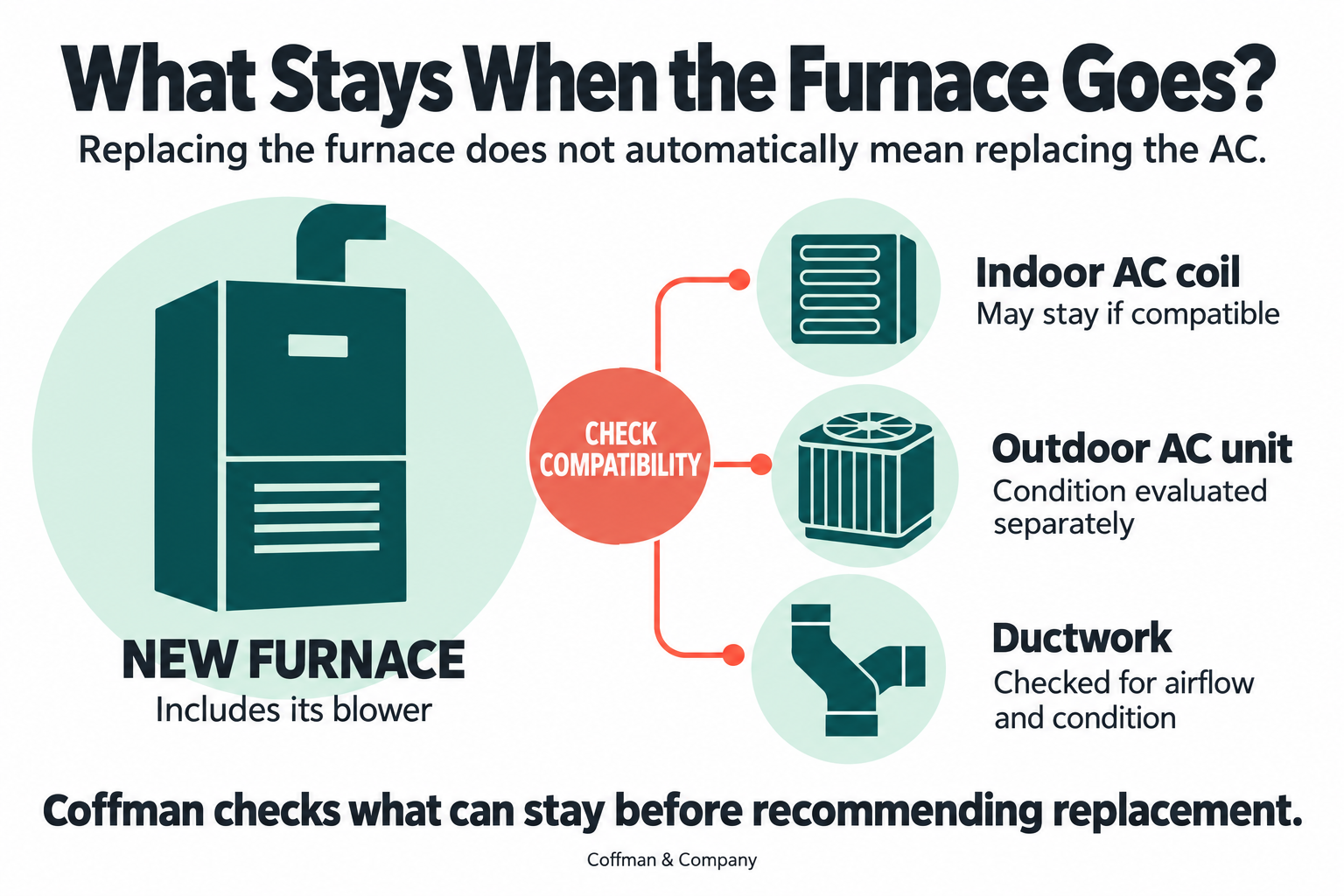
Not necessarily. A central furnace and air conditioner perform different jobs, even though they share parts of the home's air-distribution system.
In a typical furnace-and-central-AC setup, the furnace blower moves air through the ducts during both heating and cooling. The AC also uses an indoor coil and an outdoor unit. Replacing the furnace therefore requires checking how the new blower, controls, and existing cooling equipment will work together.
The AC's condition should be evaluated separately from the furnace failure.
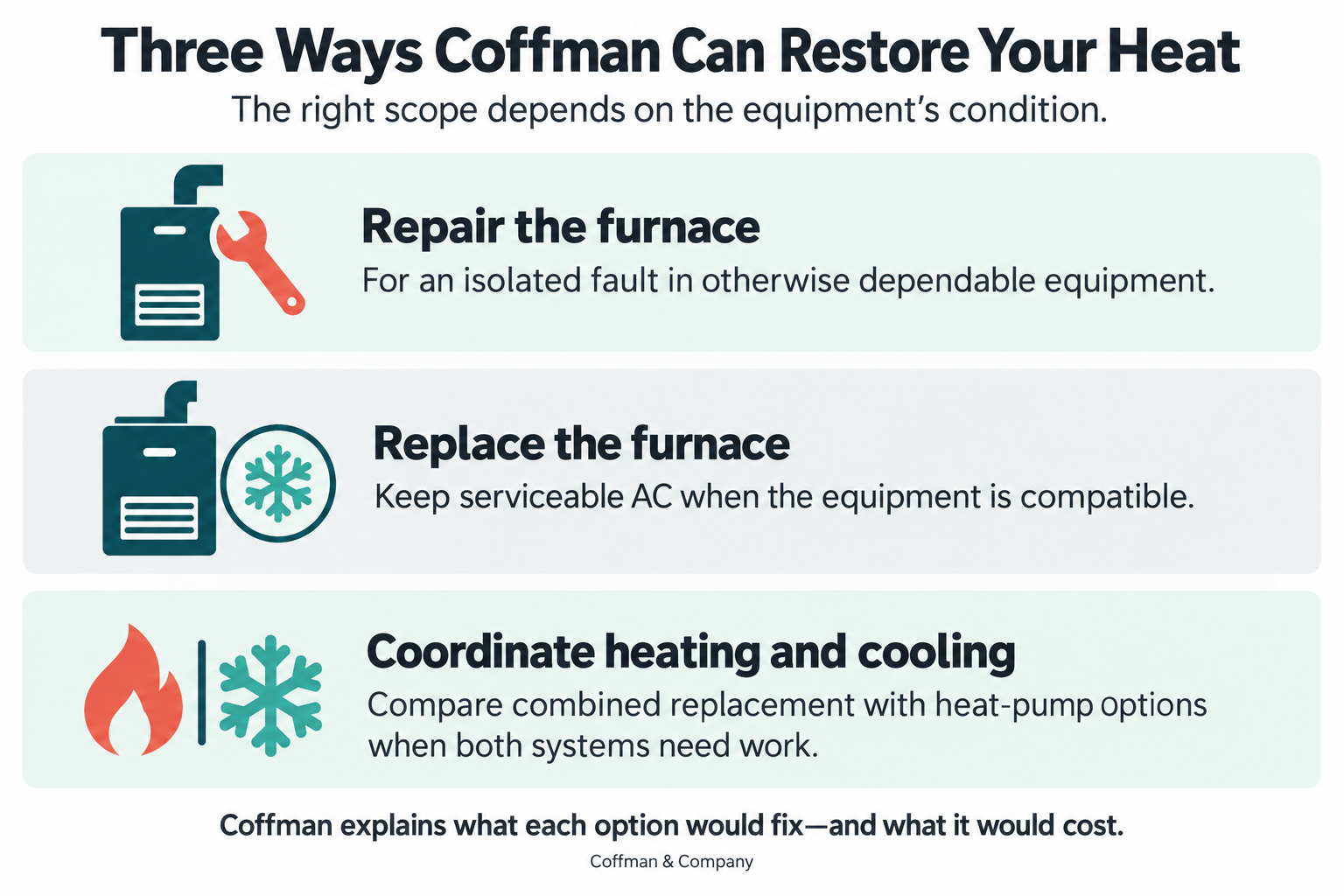
| Existing equipment | Option to evaluate | What needs confirmation |
|---|---|---|
| Repairable furnace fault; AC works well | Repair the furnace | Repair cost, remaining condition, and safe operation |
| Furnace needs replacement; AC is serviceable | Replace the furnace and retain compatible AC | Blower airflow, controls, coil compatibility, and installation requirements |
| Both furnace and AC have substantial problems | Compare combined replacement with heat-pump options | Complete scope, heating performance, installation costs, and incentives |
| Furnace is serviceable; AC needs replacement | Compare a new AC with a heat pump paired with the furnace | Furnace compatibility, controls, and the value of added heating |
Replacing both systems together may coordinate installation work and avoid another project soon afterward. But those benefits need to justify the additional expense. The furnace and AC being the same age does not, by itself, establish that both need replacement.
If both are being considered, separate AC installation and furnace estimates can help show the cost of each option.
When a Heat Pump Belongs in the Comparison
A heat pump provides cooling and can reverse its operation to heat the home. It becomes relevant when you are considering changes to both heating and cooling, or when an AC replacement could also provide useful heating.
There are two main arrangements to compare.
A Heat Pump Paired With a Gas Furnace
A dual-fuel system uses a heat pump and a compatible gas furnace to heat the same home. The heat pump can provide heating during milder weather, while the furnace supplies heat when outdoor temperatures fall below the system’s selected switchover point. The controls manage that change automatically.
This arrangement may allow you to keep a serviceable furnace while adding heat-pump heating and cooling. Coffman evaluates the furnace, indoor equipment, and controls to determine whether they can work with the proposed heat pump.
Coffman offers heat-pump installation and dual-fuel options for Front Range homes.
An All-Electric Heating and Cooling System
An all-electric installation uses the heat pump without a gas furnace. Depending on the design, it may include a new indoor air handler, which circulates air through the ducts, and supplemental electric heat.
For a Wheat Ridge home, the proposal needs to account for cold-weather heating demand. The selected heat pump's output at low outdoor temperatures matters, along with how any supplemental heat will operate. A seasonal efficiency rating alone cannot establish that the system will keep the house warm.
Electrical requirements also depend on the equipment selected and the home's available capacity. A panel upgrade should follow an assessment of those requirements rather than an assumption based solely on the house's age.
A useful heat-pump estimate explains what would provide winter heat, which existing equipment would remain, and what additional installation work is included.
What Can Change the Replacement Price?
The equipment price is only part of the project. Two estimates can differ because they include different work, rather than because one contractor charges more for the same installation.
Equipment Size and Airflow
A heating-load calculation estimates how much heat the home needs during cold winter weather. Insulation, windows, air leakage, and other building characteristics influence that demand.
The duct system must also be able to deliver the required airflow. Cold rooms may need duct repairs or modifications rather than simply a larger furnace.
The estimate should distinguish equipment replacement from additional work intended to improve heat distribution.
Venting and Drainage
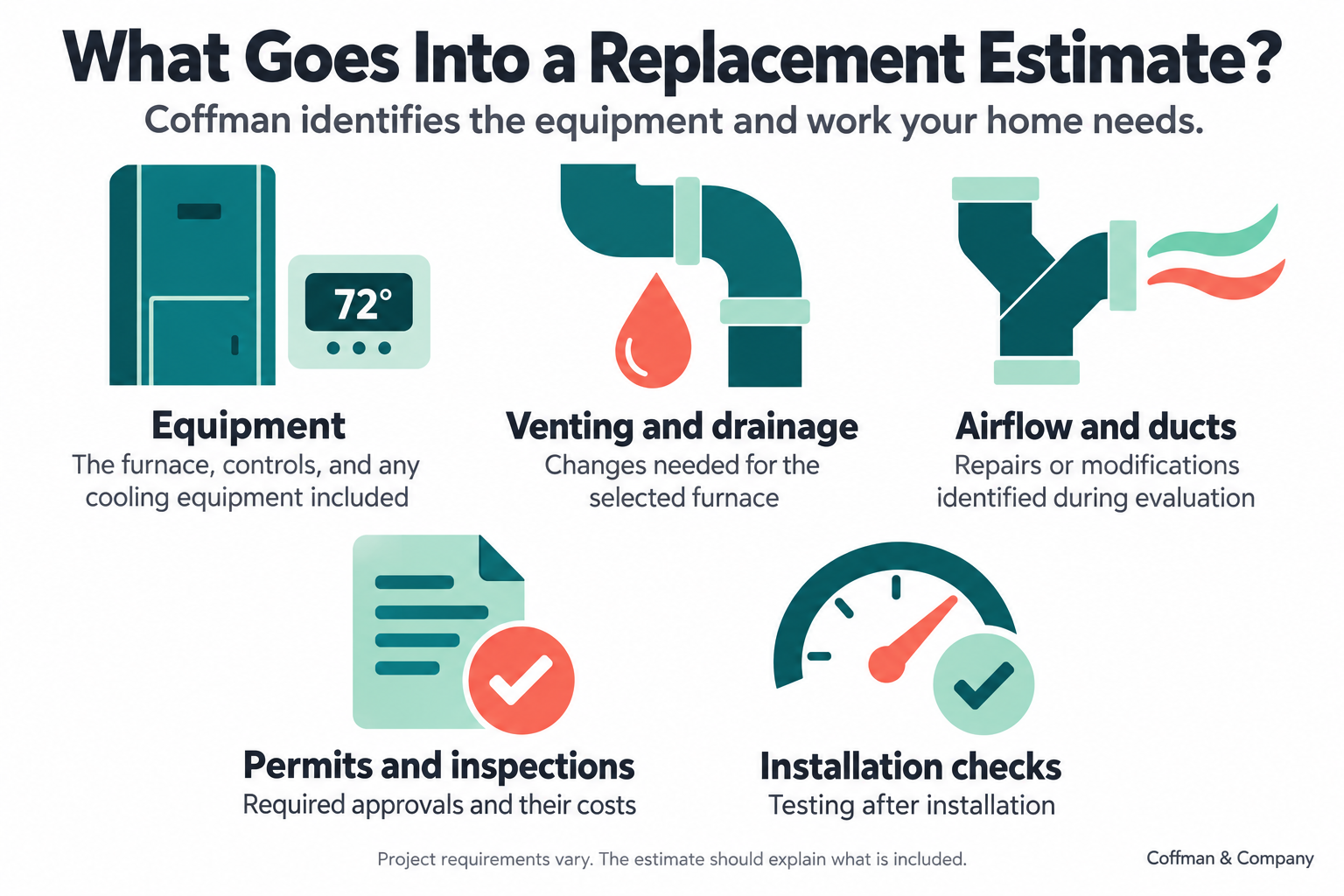
A high-efficiency condensing furnace recovers additional heat from its exhaust and produces water that must drain away. Replacing a different type of furnace with this equipment can require changes to venting and drainage.
If the existing furnace shares a chimney with another appliance, such as a water heater, the remaining venting arrangement also needs evaluation. These installation details can affect the price even when the new furnace fits in the same space.
Wheat Ridge Permits and Inspections
The City of Wheat Ridge lists furnace and boiler replacement among projects requiring a building permit. It also identifies electrical-service changes and air conditioners as work requiring permits.
A complete proposal should explain the permits and inspections required for your project, who will arrange them, and whether their costs are included.
How Colorado’s Furnace Standards Affect Replacement
You do not have to replace your existing furnace simply because Colorado’s equipment standards have changed. The decision to repair or replace it still depends on its condition, whether it can operate safely, and the cost of the work needed.
If you choose replacement, the new furnace must meet the applicable state requirements. Beginning January 1, 2026, Colorado law established limits on nitrogen oxide emissions—pollutants produced when fuel burns—for certain new gas furnaces. Qualifying ENERGY STAR-certified equipment also satisfies the law’s requirements, and some equipment is exempt.
Coffman can explain which replacement models meet the requirements and what each would cost to install. That allows you to compare a repair with suitable new equipment without assuming the law requires you to replace a furnace that can still provide safe, reliable heat.
Compare the Repair Bill With the Full Cost of Replacement
Repair usually costs less than buying a new furnace. The question is whether that repair will leave you with dependable heating—or whether spending more on replacement would provide benefits worth the additional cost.
Start with written estimates that explain the total for each option:
The repair estimate should include diagnosis, parts, labor, and any other work needed to restore heating. It should reflect confirmed warranty coverage and identify known problems the repair will leave unresolved.
The replacement estimate should include the new equipment, removal of the old furnace, installation work, permits, and testing. Any necessary duct, venting, drainage, or electrical changes should also be listed.
This detail helps you understand the price difference. A repair may restore an otherwise reliable furnace, while replacement may address several equipment problems at once.
Understand What Energy Savings Could Contribute
A more efficient furnace can use less gas to produce the same amount of heat. However, the efficiency rating alone cannot tell you how much your bills will fall. Weather, energy rates, thermostat settings, and installation quality also affect heating costs.
Estimated annual savings help show how lower energy use could offset part of the replacement expense over time. A useful estimate accounts for the existing furnace, the proposed equipment, and the household’s heating costs. Coffman can explain the expected efficiency improvement and the assumptions behind any savings estimate, while keeping comfort and reliability benefits in the comparison.
For a heat pump replacing some or all of your gas heating, the estimate needs to include both fuels. Your gas bill may decrease while your electricity bill increases. Savings depend on the change in the combined cost of heating your home.
If the project also adds air conditioning for the first time, include that benefit in your decision. Using the new cooling system can increase summer electricity costs.
Financing Can Help Make Replacement More Manageable
If replacement is the better choice for your home, paying the full installation cost upfront may be a concern. Coffman’s financing and payment-plan options can spread that expense over time, subject to approval and program terms.
Our team can walk you through the available plans, including monthly payments, repayment periods, and any interest or fees. We can also explain promotional deadlines and conditions so you understand the payment schedule and total financing cost before choosing a plan.
How Heat-Pump Incentives Affect the Replacement Cost
Program resources reviewed October 28, 2026.
Rebates and installation discounts can make a heat pump more affordable compared with other replacement options. Eligibility and amounts depend on the selected equipment, your utility service, contractor participation, and the requirements in effect when the system is installed.
For eligible Xcel Energy customers, programs such as Whole Home Efficiency connect qualifying improvements with incentives. The program includes an assessment and enrollment process, so participation involves more than purchasing an efficient heat pump.
Colorado’s heat-pump tax-credit program provides a different benefit. A registered contractor receives the tax credit and passes a required discount to the customer on a qualifying installation. The homeowner benefits through the installation price rather than claiming this particular credit on a personal tax return.
Coffman can help explain which incentives may apply to your proposed installation and how they affect the price. An installation discount reduces the amount charged, while a rebate paid after completion lowers the final cost without necessarily reducing the upfront payment. Accounting for that difference gives you a clearer comparison between a heat pump and other replacement options.
Common Questions About Furnace Repair and Replacement
Can a Formula Tell Me Whether to Repair or Replace My Furnace?
No formula can reliably make that decision on its own. Some repair-or-replace rules multiply the furnace’s age by the repair price, but that number does not account for warranty coverage, the condition of other components, or the cost of a suitable replacement.
Coffman evaluates those details together. An older furnace with an affordable repair may still be worth keeping, while a furnace with repeated breakdowns and several damaged components may justify replacement.
Can a Furnace Repair Give Me Time to Prepare for Replacement?
A limited repair may restore heating while you budget for new equipment and consider installation options. Its value depends on the expense and whether the furnace has other problems that could interrupt heating again.
Coffman can explain whether the proposed repair would provide a reasonable way to keep the furnace operating during that planning period. If restoring heat requires extensive work, comparing that expense with an immediate replacement can help establish which approach makes better use of your budget.
Will Replacing My Furnace Give Me Air Conditioning?
Replacing the furnace alone will not add air conditioning. A furnace heats the home, and its blower circulates air through the ducts. Cooling requires additional equipment, such as an indoor cooling coil and an outdoor AC unit.
If your home already has central AC, compatible cooling equipment may remain when the furnace is replaced. If you want to add cooling, Coffman can include an air conditioner or heat-pump option in the installation estimate, with the additional equipment and work clearly identified.
Does This Repair-or-Replace Advice Also Apply to Boilers?
The general comparison still applies: the repair cost, equipment condition, and history of breakdowns all matter. However, a boiler requires a different inspection and replacement plan.
A furnace heats air and distributes it through ducts. A boiler heats water for radiators, hot-water baseboards, or radiant floors. Poor heating can result from the boiler itself or from problems with water circulation and controls.
Coffman’s boiler services address those systems. The evaluation helps establish whether repairing the boiler or its connected components can restore dependable heat, or whether boiler replacement offers better value.
Get a Clear Recommendation for Your Wheat Ridge Home
You should understand what fixing the furnace will cost before deciding to replace it. If new equipment is the better investment, you should also know which parts of your existing system can stay and what the larger project would accomplish.
Coffman & Company has served the Greater Denver area since 1983. Our NATE-certified team provides furnace repairs and replacements, along with cooling and heat-pump services, so we can help you compare the work your home actually needs.
Call (720) 600-6887 or schedule heating service with Coffman & Company to have the problem assessed and your options explained. Considering replacement? Request a free furnace installation estimate with the equipment and installation costs clearly identified.